The current application of industrial robots in various industries
Release Date:2023.05.29 Page Views:519371.Automobile manufacturing industry
In China, 50% of industrial robots are applied in the automotive manufacturing industry, among which over 50% are welding robots. In developed countries, automotive industrial robots account for more than 53% of the total number of robots in use. According to statistics, the world's major automobile manufacturing plants have more than 10 robots for every 10,000 vehicles produced annually. With the continuous development and improvement of robot technology, industrial robots are bound to play a significant role in promoting the development of the automotive manufacturing industry. China is advancing from a manufacturing giant to a manufacturing power, and it needs to enhance processing methods, improve product quality and increase enterprise competitiveness. All these indicate that the development prospects of robots are huge.
2. Electronic and electrical industry
Ics and surface mount components in the electronic field, as well as industrial robots, are all widely used in these areas. At present, the SCARA four-axis robot is the most widely installed industrial robot in the world's industrial sector. The second one is the series joint type vertical 6-axis robot. Luo Baihui pointed out that these two types of industrial robots, which account for more than half of the global installed capacity, are the focus of our attention.
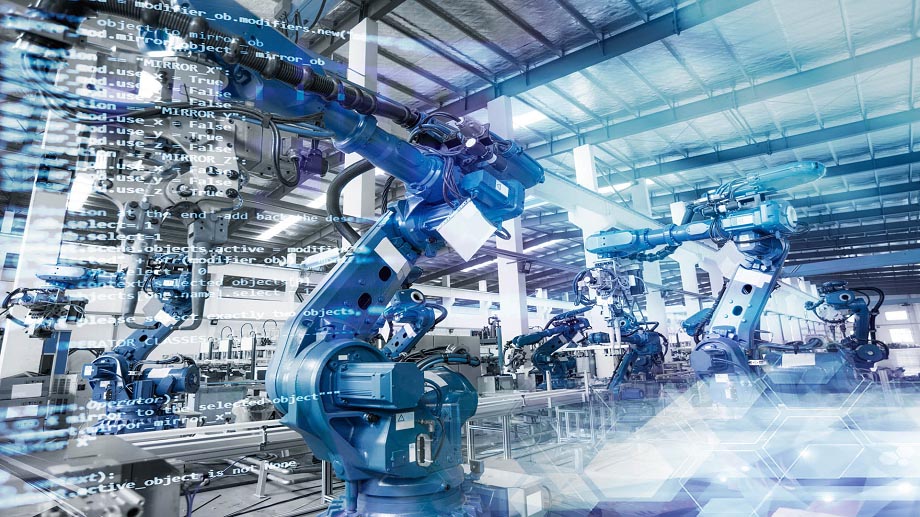
All the robots in the special zone are specially designed by domestic manufacturers according to the demands of the electronic production industry. The miniaturization and simplification features have enabled high-precision and efficient production in electronic assembly, meeting the increasingly refined requirements for electronic assembly processing equipment. Moreover, automated processing has significantly enhanced production efficiency. According to relevant data, the yield of finished products can be increased from 87% to 93% after being polished by robots. Therefore, whether it is a "robotic arm" or a more advanced robot, the production efficiency will be greatly improved after being put into use.
3. Rubber and plastic industry
The cooperation in the plastic industry is close and highly specialized: the production, processing and mechanical manufacturing of plastics are closely linked. Even in the future, this industry will remain an important economic sector and ensure a large number of jobs. Because plastic is almost everywhere: from the automotive and electronics industries to consumer goods and food industries. Mechanical manufacturing, as a technological process connecting production and processing, plays a crucial role here. Raw materials are processed into innovative, fine and durable finished or semi-finished products for fine processing through injection molding machines and tools - by adopting automated solutions, the production process becomes more efficient, economical and reliable.
To enter the plastic industry, one needs to meet extremely strict standards. This is certainly no problem for robots. It is not only more suitable for production tools under clean room environmental standards, but also can complete high-intensity operations beside injection molding machines. Even in a high-standard production environment, it will reliably enhance the economic benefits of various processes. Because the robot has mastered a series of operations, picking and placing, and fine processing tasks.
With its versatile nature, robots operate quickly, efficiently and flexibly. It is strong and durable and can withstand the heaviest load. This can better meet the growing requirements for quality and production efficiency and ensure that the enterprise has a decisive competitive advantage in the future market competition.
4. Foundry industry
Working in multiple shifts in extreme working conditions - operations in the casting domain impose a heavy burden on workers and machines. Another reason for manufacturing powerful KUKA casting robots specifically designed for extremely heavy loads: in fields with high pollution, high temperatures or harsh external environments. The easy-to-operate control system and dedicated software packages make the application of the robot highly flexible - whether it is directly used in injection molding machines, or for connecting two processes, or for transporting extremely heavy workpieces. Because it has the advantages of better positioning performance, high load-bearing capacity and the ability to safely and reliably carry out high-intensity operations, etc.
With its modular structural design, flexible control system and dedicated application software, robots can meet the higher requirements of the entire automation application field in the foundry industry. It is not only waterproof, but also dirt-resistant and heat-resistant.
It can even be directly used beside, inside and above the injection molding machine to remove workpieces. In addition, it can reliably connect the process unit and the production unit. In addition, robots perform exceptionally well in fine processing operations such as deburring, grinding or drilling, as well as in quality inspection.
5. Food industry
The application scope of robots is becoming increasingly wide. Even in many traditional industrial fields, people are striving to have robots replace human work, and the same is true in the food industry. At present, the food industry robots that people have developed include canning packaging robots, automatic lunch robots and beef cutting robots, etc.
From the perspective of imagining robots, the issue of cutting the front body of a cow is not a simple one; the details to be considered are particularly complex. This is because, from the perspective of a cow's body structure, although the limbs of each cow are roughly the same, there are still many differences. The robot system must select the best cutting method for each cow to minimize the waste of beef to the greatest extent. In fact, to enable the robot system to proficiently simulate the movements of a skilled slaughterhouse worker, the ultimate solution will be to integrate multiple high technologies such as sensor technology, artificial intelligence and robot manufacturing, so that the robot system can automatically adapt to various changes in product processing.
The robot for cutting beef compares the limbs of the cattle to be processed with the cutting information of previous cattle limbs stored in the database to process each cow. In this way, the starting and ending points of the knife can be determined along the initial route direction set for each cut, and then the robot drives the knife to cut into the body of the cattle. The sensor system monitors the magnitude of the force used in the cutting to determine whether the knife is cutting the bone, and at the same time feeds the information back to the robot control system to control the blade to move only along the contour of the bone, thereby avoiding damage to the blade.
6. Chemical industry
The chemical industry is one of the main application fields of industrial robots. At present, the main clean robots and their automated equipment applied in the chemical industry include atmospheric manipulators, vacuum manipulators, clean coating manipulators, clean AGVs, RGVS and clean logistics automatic transmission systems
All are equal. Many modern industrial products require precision, miniaturization, high purity, high quality and high reliability in production. A clean environment is needed in the production of products, and the level of cleanliness directly affects the product qualification rate. Clean technology is constantly developing in accordance with the increasingly strict control requirements, control methods and control facilities for pollutants in the clean production environment in product production. Therefore, in the field of chemical engineering, as more chemical production sites in the future have increasingly higher requirements for environmental cleanliness, clean robots will be further utilized, and thus they have a broad market space.
7. Glass industry
Whether it is hollow glass, flat glass, tubular glass, or glass fiber - modern high-tech materials containing minerals are very important components in the electronics and communication, chemical, pharmaceutical and cosmetic industries. And nowadays it is also indispensable for the construction industry and other industrial branches. Especially for glass with extremely high cleanliness requirements, industrial robots are a better choice.
Clean glass handling system. A two-hand coordinated clean handling manipulator, with a working environment cleanliness level of 10,000. This manipulator consists of five degrees of freedom: X1, X2, Z1, Z2 and R. It is driven by servo motors and features high speed, rapid response and high repeat positioning accuracy.
In the x-direction, the X1 axis and the X2 axis share a pair of guide rails and perform alternating and coordinated movements. Among them, the end of the Z1 axis is equipped with a rotating axis R. The end of the mechanical hand is equipped with an end picker for taking and placing workpieces. The RB35J can be used in industries such as glass manufacturing and flat panel display (FPD), where two mechanical arms need to take turns to perform material handling and palletizing.
8. Household appliances industry
The requirements for economy and productivity in the large-scale equipment field of white goods are also getting higher and higher. Reducing process costs and enhancing production efficiency have become top priorities. Automated solutions can optimize the production of household appliances. Whether it's mass-producing washing machine drums or glazing bathtubs - using robots can more economically and effectively complete production, processing, handling, measurement and inspection work. It can continuously and reliably complete production tasks without the need to frequently transfer heavy components. This ensures smooth material flow on the production line - and maintains a constant high quality at all times.
The reasons are multi-faceted: Due to its higher productivity, high repeatability, high reliability, as well as optical and tactile performance, robots can be applied to almost all aspects of the production process of household appliances.
9. Metallurgical industry
Whether it is light metals, colored metals, precious metals, special metals, or steel - the metal industry cannot do without foundries and steel/metal processing. Moreover, without automation and multi-shift operations, it is impossible to ensure the economic benefits and competitiveness of production and reduce the heavy workload of employees.
The main working scope of industrial robots in the metallurgical industry includes drilling, milling or cutting, as well as processing procedures such as bending and stamping. In addition, it can also shorten the working cycle of the welding, installation, loading and unloading processes and increase productivity.
Even in the casting field, KUKA robots equipped with dedicated casting equipment have demonstrated their extraordinary strength. They have advantages such as long service life, high temperature resistance, water resistance and dust resistance. In addition, KUKA robots can independently complete surface inspection and other inspection tasks, thus making significant contributions to efficient quality management.
10. Tobacco industry
The application of industrial robots in China's tobacco industry emerged in the mid-1990s. Yuxi Cigarette Factory used industrial robots to stack its finished cigarette products, and AGVs (self-propelled trolleys) were used to transport the finished product pallets, which saved a lot of manpower, reduced the damage to cigarette boxes, and improved the level of automation.
The application of industrial robots in the tobacco industry \ n \ nOver the years, China's tobacco industry has continuously strengthened technological transformation and promoted technological progress. The production equipment of key cigarette enterprises has reached the international level of the early 1990s.
However, advanced production equipment must be equipped with corresponding management methods and logistics support systems to truly bring out the high efficiency of the equipment. For instance, the distribution of raw and auxiliary materials for cigarettes requires an advanced automated logistics system to be accomplished. Traditional manual management and manual handling are prone to errors and are not timely, and can no longer meet the needs of production development. Precise industrial robots are applied in this field.